Runplast
ISOISO
900114001
Request a quote
Runplast
Runplast

3D Printing

From digital design to physical component.

Prototype and low-volume production using modern FDM, SLA and SLS additive manufacturing technologies.

Start a project
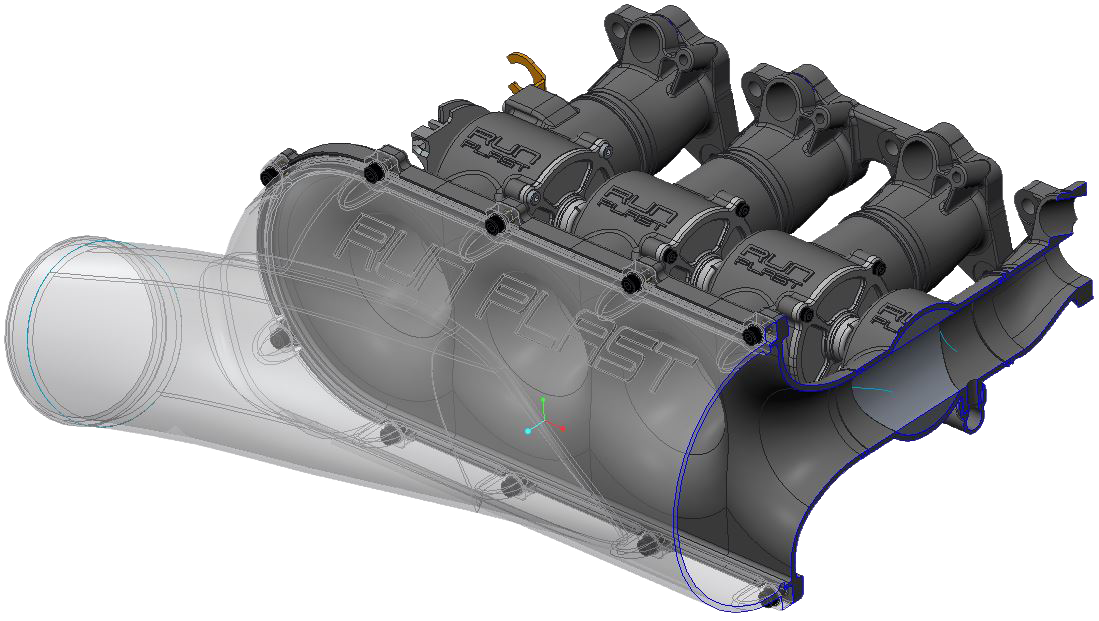
Runplast component manufactured using 3D printing

We do more than simplyprint a part.

In product development, time, flexibility and the right cost structure often determine how quickly an idea can become a functional product.

3D printing makes it possible to turn a digital design into a physical component, prototype or even a low-volume end-use part within a short lead time.

FDM, SLA and SLS cover different application areas, so we select the most appropriate process according to the requirements of the component.

RUNPLAST / 3D PRINTING

Three technologies.Different applications.

There is no single 3D printing technology that is universally best for every application. We select the right process based on the component's function, geometry, loads and required quality.

FDM

Fast and flexible manufacturing for engineering applications

FDM is particularly effective when fast production, suitable mechanical properties and cost efficiency are all important.

Design changes can be followed by a new physical version within a short time, making FDM especially valuable during early development when several design iterations need to be tested quickly.

TYPICAL APPLICATIONS
  • Functional prototypes
  • Machine and equipment components
  • Covers and housings
  • Assembly and production aids
  • Custom fixtures and jigs
  • Low-volume engineering components
SLA

High precision and detailed surfaces

SLA uses photopolymer resin and is particularly suitable for applications where fine detail, dimensional accuracy and high surface quality are key requirements.

It can reliably reproduce complex and small geometries where FDM may require compromises in detail or surface finish.

TYPICAL APPLICATIONS
  • Highly detailed prototypes
  • Precision models
  • Form and dimensional verification
  • Presentation models
  • Small and complex geometries
  • Design and development models
SLS

Complex geometries and functional components

SLS uses a laser to sinter polymer powder layer by layer. One of its major advantages is that conventional support structures are not required.

This provides greater geometric freedom while allowing the finished components to achieve mechanical properties suitable for functional use.

TYPICAL APPLICATIONS
  • Complex functional components
  • Machine and equipment parts
  • Low-volume end-use parts
  • Custom engineering components
  • Complex internal geometries
  • Lightweight structures

FDM, SLA or SLS?We'll find the right solution.

Send us your 3D model or technical drawing, or briefly describe how the component will be used. Based on the geometry, quantity and technical requirements, we will help identify the most suitable technology.

Help me choose

The right technologyfor the right component.

In 3D printing, the optimal solution is not determined by the name of the technology alone.

We consider the component's function, geometry, loading, quantity and production economics together.

01
Function

How and in what environment will the component be used?

02
Geometry

Size, level of detail, wall thickness and complexity.

03
Quantity

Is it a single prototype or a low-volume production run?

04
Loading

What mechanical loads must the component withstand?

05
Surface

Surface quality, detail and appearance requirements.

06
Cost

The economics of a technically suitable solution.

FUNCTIONAL COMPONENT
FDM / IN PRODUCTION

Do you have a 3D model or technical documentation?Send it to us and we'll review it.

We review the geometry, intended use and expected quantity, then recommend an appropriate technology and material.

Send my project

One technology,multiple development stages.

01Digital model

Production starts with properly prepared 3D geometry.

02Prototype

Fast physical validation of geometry, fit and function.

03Validation

The design can be refined based on physical testing and feedback.

04Low-volume production

In suitable applications, the final design can be manufactured directly.

We don't sell a technology.We find the right solution.

For us, 3D printing is not a goal in itself. It is one of the tools available within product development and manufacturing.

By selecting the appropriate technology, material and manufacturing parameters, we aim to create a solution that is both technically suitable and economically viable.

Whether you need a single prototype, a development batch or low-volume production, we support the process from digital design to the finished component.

Request a quote

Have anidea?

Show us what you want to create.

Tell us briefly about your project, expected quantities and, if available, attach your drawing or 3D model.

We respond within 1 business day.You will receive an automatic email confirmation when your enquiry has been received.